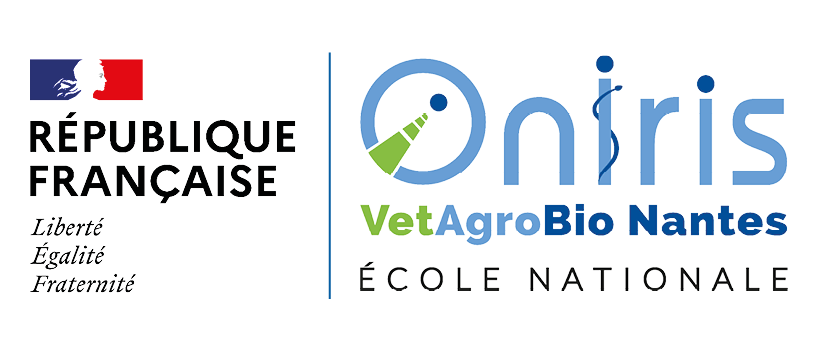
Green Factories Master (M1+M2)
Process engineering for sustainable valorisation of bioresources
Follow us on social media !
Master’s degree in Process and Bioprocess Engineering, jointly accredited by Nantes University and Oniris VetAgroBio Nantes
The Green Factories Master’s Programme at a glance
- Year of entry: September 2025
- Duration: 2 years
- Course run in partnership with the University of Nantes
- Language: English
![[Translate to English:] diplôme nationale de master contrôlé par l'état](https://www.oniris-nantes.fr/fileadmin/Documents/02_Etudier_a_Oniris/05_Les_Masters/Micas/logo_master.png)
![[Translate to English:] logo oniris vetagrobio](https://www.oniris-nantes.fr/fileadmin/Ecole/Images/Logotheque/Logos_Ecoles/logo_Oniris.png)
![[Translate to English:] logo nantes université](https://www.oniris-nantes.fr/fileadmin/Ecole/Images/Etudes/masters/logo_Nantes_Universite.jpg)
![[Translate to English:] green factories](https://www.oniris-nantes.fr/fileadmin/Documents/02_Etudier_a_Oniris/05_Les_Masters/Green_Factories/master-green-factories-oniris-vetagrobio-nantes-universite.jpg)
Why choose the Green Factories Master’s programme?
The Green Factories Master’s programme is built around extensive laboratory-based learning, offering a course designed by and for researchers. In particular, it benefits from the internationally recognised expertise of the supporting laboratory GEPEA,deeply involved in research and industrial programmes aimed at industrial transition in the fields of food (nutrition and health), energy (biofuels, etc.) and the environment (green chemistry, industrial ecology, waste minimisation, etc.).
- The programme is taught entirely in English by lecturers and researchers from internationally recognised laboratories.
- A strong focus on cutting-edge research and its application to addressing the industrial and societal challenges of the industry of the future.
- Access to leading-edge pilot platforms and facilities, including state-of-the-art European facilities such as the AlgoSolis R&D platform (microalgae valorisation), enabling the acquisition of practical expertise directly relevant to the industry’s current needs.
- Access to innovative equipment and original experimental prototypes, ranging from laboratory scale to a semi-industrial platform.
- A research-based training programme combining individual research projects with direct involvement in international collaborations with leading teams in the field (Europe, Australia, the USA, South America, etc.).
- Personalised mentoring to tailor the programme to the student’s needs.
The programme is based on a multidisciplinary curriculum ranging from plant (bio)chemistry to process engineering and modelling, designed to equip students with the skills and knowledge needed to meet the challenges of an industry based on the utilisation of bioresources. Each student will be able to choose between two specialisation areas: ‘Valorisation of microalgae’ or ‘Innovative food factory’.
The course enables participants to develop skills in the following areas :
- Process and Bioprocess Engineering
- Sustainable production and the circular economy
- Biorefinery for agricultural and bio-based resources
- The cultivation and industrial utilisation of microalgae
- Biotechnology and food processing
The programme benefits from a number of industrial and international partnerships, including with Australia (Flinders University, Murdoch University), the USA (Georgia College and State University, Grove City College), South America (University of São Paulo and Federal University of Santa Catarina) and Europe (TU Berlin, University College Dublin, etc.). The Master’s programme is also part of the ERASMUS exchange programmes with several European universities, as well as internationally (around twenty countries, including Lebanon, Indonesia, etc.). Industrial partners are already involved (AlgoSource in the microalgae sector, for example).
Year 1 Programme (M1)
First half of the year
- Basic Sciences (5 ECTC)
- Plant biomass resource and its utilisation (5 ECTS)
- Process modeling, simulation and Control (Part 1) (5 ECTS)
- Circular economy and LCA (5ECTS)
- Research Discovery (5 ECTS)
- Engineering of Research I (5 ECTS)
Second semester
- Separation processes (4 ECTS)
- Process Modeling Simulation & Control (Part 2) (4 ECTS)
- Advanced research in plant resource processing and valorisation (3)
- Chosen specialyzed course 1* (12 ECTS)
- Engineering of Research II (4 ECTS)
- Summer School (3 ECTS)
Year 2 Programme (M2)
- Biomass conversion technologies (5 ECTS)
- Chosen specialized course 2* (12 ECTS)
- Engineering of Research III (3 ECTS)
- Master Thesis Building (7 ECTS)
- Conferences (3 ECTS)
- Supervised Research in Solo (Master Thesis) (30 ECTS)
Examples of selected specialist courses (related to the research activities of the host laboratories) :
- Dans “Microalgae valorisation”: Biology of microalgae, , Microalgae culture and photobioreactor engineering, Harvesting and biorefinery of microalgae, Microalgae for circular economy
- Dans “Innovative Food Factory”: Advanced food processing, Clean label and functional ingredients, Toxical risks and packaging
- Dans “Microalgae valorisation” & “Innovative Food Factory”: Bioreaction Engineering, Technological innovations, Cell factory and Biochemical Analysis of bioproducts, Advanced monitoring of bioprocesses.
Bac +5
Target skills
The programme equips students with advanced skills in the following areas :
- Bioprocess engineering, chemical engineering and process engineering, as well as biotechnology
- Sustainability and the circular economy, with a focus on resource efficiency, waste recovery and energy optimisation
- Design, optimisation and scaling-up of (bio)processes for agricultural and biological resources, including bio- and photobioreactors
- Downstream processes for the industrial conversion of agricultural and biological resources into high value-added products, such as food, biofuels, biochemicals and bio-based materials
- Microalgae cultivation and its industrial applications
The Master’s programme develops high-level research skills within an international collaborative environment. It focuses on the use of modelling tools and the control of (bio)processes, ranging from individual units to complete operational systems. The aim is to propose sustainable solutions to reduce the energy footprint of industries whilst preparing students to tackle contemporary challenges related to the management of bioprocesses and resources.
Career opportunities
- Engineer/Head of Research and Development
- Operations or Production Engineer
- R&D engineer or consultant
- Researcher or lecturer-researcher (PhD level)
- Research Lead (PhD level)
- Project Manager (PhD level)
Further studies
After completing your two-year Master’s degree, you will have the choice of either pursuing a career or continuing with a research project at PhD level. A PhD will open up more opportunities for you.
Find out more about the PhD programme
For students who do not live in France and do not hold French nationality :
- Countries participating in the Campus France scheme : www.campusfrance.org
- For countries that do not use the Campus France procedure (including EU countries), please follow the VAEE procedure (https://www.univ-nantes.fr/formation/formation-continue/vae)
![[Translate to English:] gepea](https://www.oniris-nantes.fr/fileadmin/Documents/02_Etudier_a_Oniris/05_Les_Masters/Green_Factories/logos_labos_partenaires.jpg)
Please contact us if you have any questions
You may also be interested in these articles
- One Health - Emerge Master 1 and 2
- Master's Degree in Health Bioproduction(BPS)
- Master’s Years 1 and 2: MICAS – Microbiota, Gut, Brain and Healthy Food
- Master’s degree in Nutrition and Food Science, specialising in Innovation and Food Science(MIAMSA)
- Master’s degree in Nutrition and Food Science, specialising in Nutrition and Health(NutriS)
- Master’s degree in Biology and Agrosciences, specialising in Animal Sciences for the livestock industry of the future (SAED)